Concept Listening: A Dinner Party Idea

Cigars have scotch.  Peanut butter has chocolate.  Pizza has beer.  Connoisseurs everywhere recognize that by cleverly pairing pleasurable experiences both can be enhanced and blended into something exponentially greater.

While listening to music yesterday as I biked around DC, I realized that these same enhancing dynamics might apply to pairings between particular pieces of music and a particular ideas.  Of course, this is done all the time in movies and musicals where songs are composed for a specific moment in a story.  But these moments are highly structured.  They do not free the imagination because they impose a specific bounded vision.  They also tend to mold the music to fit the story, instead of the story to fit the music.  This is fine, but something is lost.  Something pure and abstract in the music is ignored.

I propose a fun activity to do with a small group of friends.  Each person is responsible to pair a chosen concept with a chosen song and articulate the concept to the group.  Then together the group quietly listens to the song and talks afterward about the experience.  This is a chance to get your artistic hats on.  Of course, the more creative pairings (that still work), the better.  And note, lyrics are not relevant.  This is about the mood and abstract meaning that the music offers and the relationship it develops  with the concept in the cinema of your imagination.  The key: focus only on this activity (dimming lights is good, multi-tasking is bad) and let your imagination run free.

I call this activity concept listening as it is analogous to the popular concept album, an album that crafts its songs to contribute to a theme or overall story.  In concept listening however, the listener picks the concept, which is more explicitly stated, and picks a single song.

Last night, Alicia and I tried concept listening.  We did the idea/song pairing below and enjoyed an amazing shared experience.  Though we have heard this song many times, the concept made the song seem completely fresh to us. I hope you enjoy it.

Is it?  

Yes it is coming.  

The captain orders the crew into action.  A grizzled, bearded man and a younger friend pull an oar on a tireme, an Athenian warship, as it struggles to outrun one of the Aegean’s dreaded winter storms.  They row mightily, land comes into sight, but the wind picks up, chaotically whistling through the sails, and they realize they are too late.  Though the crew is already weary, the captain turns the prow back out to sea.  Their only hope now is to wether the storm.

As two hundred crewmen row in unison, for all they are worth, against mammoth cresting waves, likely death brings a strangely vital and shared energy.  Waves pound.  Salt spray soaks their beards.  And they face the thrill of death together.

song (moulin rouge tango de Roxanne)

Let know what you think!  If you have pairing ideas please share.

Turner Reflection Snowstorm on the Sea, Turner, by Joe Scotland

Turner Reflection Snowstorm on the Sea, by Joe Scotland


My Finest Hour

Some friends of mine have an incredibly cute 2 year old son.  In fact, he’s got a talent agent, and marketing people want to use him in super duper cute kiddy commercials.  Being good, conscienteous parents, my friends are a little worried about scarring or frightening their boy.  These are undoubtedly legitimate feelings, but I want to reassure them: a tear or two is well worth being able to do what I am now doing right now!

Jer in Taiwanese Huggies Commercial, 1987

Jer in Taiwanese Huggies commercial, 1987

I was an objectively cute kid.  I’m sure you readers out there think that you were cute, I am sure your mothers agreed, but were you Mr. Huggies Taiwan, 1987?  I didn’t think so.  That is because they only take the best of the best…which is me, in case that was not clear.

Also please note:

  • The finger in the belly button.  
  • The red dotted box drawing your attention to the extra-fluffy crotch portion.

I Love Fox News

This picture, connecting Hillary to Benghazi, ran above the headline.

This picture, connecting Hillary to Benghazi, ran above the headline on Fox’s front page.

I love Fox News.  Reading it helps me stay in touch with my conservative roots, and observing their bias allows me to relish in enjoyable levels of contempt and self-righteousness.  Today, I found gold.  I would like to bond with all of you by collectively pointing at Fox News, shaking our collective heads, and smirking.

As you might have heard, Hillary Clinton fainted and suffered a concussion today.  Fox News ran this headline on their main page,

BENGHAZI HEARINGS: Clinton will not testify before Congress on Libya, purported concussion cited

Nothing is false, but you should read the article for laughs.  After stating what was reported about Clinton’s fainting, the article states eerily, “However, the agency did not say when the fall occurred.”  The rest of the article is about how she really needs to testify and that John Kerry is letting her off the hook.

There is absolutely no evidence that Clinton’s fall is merely purported, or had anything to do with Benghazi, yet “Benghazi Hearings” appears on the front page of Fox News, bold and in all caps, which has the well-understood framing affect of implying that the rest of the headline has to do with the Benghazi hearings.  This is a strategy that people use to, for instance, sell you stuff you do not need—a classic trick.  In this case, the title states and implies that the Benghazi hearings caused Hillary to pretend to faint and have a concussion.  It is true that the concussion is “purported.”  The media did not see it. However, by saying it is “purported,” they imply that it is not true.

CNN’s headline was “Hillary Clinton Faints, Has Concussion.”   ABC News said “Hillary Clinton recovering after fainting, suffering a concussion.”  Politico stated what the fallout of the concussion would be by saying, “Hillary Clinton won’t testify on Benghazi after fainting, concussion.”  However, Politico did not imply the hearings caused fake concussing, or caused the fainting at all, or implied in the article that Clinton should get her shoulder pads on and push through the pain.  Also, Politico reports how news affects politics; it’s their job to discuss the political fallout of school shootings, wars, terrorist attacks, etc.  Finally, all of these articles talked about how Clinton’s concussion would affect her work, including Benghazi hearings.  Fox news was the only one to imply without any evidence that Clinton’s ideology may have caused the news—and to do so in the title and story image.

Does anyone know if studies have been done trying to objectively measure the bias at Fox News?  It seems that it would be fairly easy to demonstrate, but it would take some money to run the study.  Why don’t liberal think tanks or super pacs do that?

I have not seen the video of my very very short interview on Dr Drew’s Show yet.  My connection was cut off for a second and I did not get many words in.  But they are sending me a video, which I will post soon with my extended comments.  There are also a ton of other topics and cool ideas that I want to discuss on my blog.  Thanks for all of your wonderful comments on Why Wars Start and Positive Theology Will Change the World.  These are two of my favorite ideas/projects lately and I am pleased how much excitement they have generated.  Thanks for reading!  I love your comments and try to respond to all of them.  


Missing Jer on National TV?

I’m on live in 21 minutes on Dr. Drew’s show on HLN (9PM) EST.  They’ve asked me to talk about My 15 Minutes of Fame.  I’m nervous.


Why Wars Start

While I was in Sri Lanka, I was working on a new manuscript on pacifism and just war theories.  One pacifist claim I was thinking about is the notion that violence begets violence.  Undoubtedly, this insight is true and useful for understanding cyclical violence, but I started finding wars where violence did not beget violence, or where at least one has to make conceptual somersaults or view history through a strong ideological lens to make it true.

So I set about exploring the roots of 172 wars and conflicts, including the 100 biggest wars in known history (by estimated death toll), all of America’s wars (I am American-ish and it is the biggest superpower), and nearly all important wars in the last 75 years (warfare is changing in nature). I am coding conflicts’ origins and how the war was waged with an evolving schema of 37 reasons for why wars start (triggers and underlying causes).  So far I have completed the 43 largest wars in history.  It has taken me approximately 250 hours of work (just under 5 hours per war).

Why am I doing all this?  Four reasons.

First, second, and third, I can experience spiritual clarity for myself as I attempt to comprehend atrocity, indulge my love of history, and simultaneously satisfy my vain desire to win arguments.  At the end of the process, I can say with some level of certainty that I know why wars start.  I can also disabuse idiotic notions.  For instance, many people, notably pacifists, believe that wars start because of a lack of moral fiber.  However, of the 115 warring parties I have examined, I have found exactly four warring parties whose dominant actors likely considered their involvement in the war to be immoral.

Of these four, only one played an important role in starting the conflict itself: the Yan Dynasty in the An Shi Rebellion.  Therefore, I can say with some certainty that cruel intentions do not start wars. Also, from my research so far, I think that violence does beget wars, but it is not one of the top reasons why most wars start. By the way, again from this preliminary work, religion does not appear to be a major cause either.

My fourth and final reason for looking at why wars start is to end wars.  Once we have figured out why wars start, we might figure out patterns, leverage points, and ways to end them, and be able to guide masses of people in modern democracies towards that end.  Of course, I will fail at this if I am doing all this research myself.  Even people who know me and trust my intelligence and goodwill will wonder about my biases and where I am getting my information.

So here is the big idea:  Enlist a host of intellectuals in identifying the historical causes of warfare and run the numbers. Someone somewhere (not me, I hope, because I have other big ideas that interest me more) needs to get a foundation on board to figure out and coordinate a global effort. From what I understand, some of these activities are being done to various extents. I do not know who, if anyone, is doing them all.

  1. Identify a core team of historians and political scientists to create a rubric for judging the reasons for wars (like my schema).   
  2. Identify ethnically and politically diverse teams of historians who can summarize the historical account of the causal chain that produced a war, how it was waged, and the mindset of the major participants.
  3. Pilot the schema and 172 war descriptions with 10 intellectuals who will grade the reasons for why the war started.
  4. Adjust schema and summaries as needed.
  5. Recruit the top 150 intellectuals in the world with diverse political, ethnic, and cultural backgrounds to grade each war.
  6. Run the numbers.

The goal: at the end of the day, we can know objectively, or as close we can get to objectivity, why wars start. Of course, the process might be different. For example, we might rely solely on historians to identify the causes according to my rubric, but the goal is still the same.

Some possible findings:

  • We might find out that wars start for very innocuous reasons that are preventable or at least predictable.  For example, the biggest cause of wars that I have seen so far is the emergence of power vacuums.  This, of course, is not the cause of all wars, but it has been a primary cause of 29 out of the 43 I have studied so far.  An obvious example of an exception would include the Jewish wars against the Roman occupation.  
  • We might find that violence does in fact beget violence.
  • We might find that wars are caused by inequality.
  • Moreover, we might discover the causes of different types of wars.  Civil wars, from my research, often have very different causes than wars between nations, as do ongoing unresolved conflicts that span generations (e.g., Isreal/Palestine).  Perhaps, conflicts with such different structures should not be compared.

Being able to have some objectivity when making the claims about the historical causes of warfare, especially the wars waged in the last 50 years, might help focus our discussions on the biggest causes and have numerous other benefits.

So now I am left wondering. Who is already doing this?  I talked to Alicia about this and she mentioned how some people are doing similar things at the Uppsala Conflict Data Program and the International Peace Research Institute. I need to learn about this more, but for now, I thought I would share the idea and see if I could get any thoughts.


Positive Theology Will Change the World

This post is adapted from some work I have been doing for grad school.  Forgive the boring academic “I-want-to-end-my-life-by-inhaling-my-neck” tone.  To ease my readers, I will embed two inane insults directed at Thomas Jefferson.

Positive psychology is now spawning positive sociology, and is likely to produce other serial fields as well.  Currently I am imagining about 20 or so academic disciplines focusing on strengths and human flourishing, one of which is positive theology.  (Naturally, I have an interest in that.  I am trying to publish a manuscript entitled Therefore Joy: A Positive Theology for the Next Generation).  In the following few paragraphs, I synthesize a representative handful of positive psychology research for a religious context, specifically in regards to death reflection, meditation, and ritual, and then discuss a possible definition of positive theology.

Death Reflection

The work of Frias and colleagues (2011), indicates that reflecting on death can help increase gratitude in individuals, unless you are a lisping loser like Thomas Jefferson.  By fully grasping the transience of life, by being exposed to death, the reality of your own death or those around you, one can better appreciate life, prioritize, and find an enormous upwelling of gratefulness.  Unfortunately, modern America bifurcates like it’s nobody’s business.  Kids go to school, parents go to work, old people go to nursing homes, and dead people go to cemeteries.  But religion can serve to connect some of these groups, especially the not living ones.

Ruins of Irish church and cemetery.

Traditionally, cemeteries ringed churches which descendants likely attended.  On a weekly basis, churchgoers were reminded as they passed the gravestones of dead family members, of the fleeting nature of life.  Also, belief in the afterlife is important to many faiths, not only the Christian faith but also Islam and other traditions, and can lead to more reflection on death.  Within the walls of the churches themselves, many faith communities still ask practitioners to contemplate the death of others and their own impending deaths on a regular basis and act in light of those reflections.  While it is tempting for the American church to follow society’s example and also compartmentalize death and ignore it, religion has an opportunity to be one of the last major social arenas in modern society where death can be discussed, considered, and reflected on at length.

In light of this, one intervention that I have thought about doing, not in a religious context specifically, but for highly mobile individuals like myself, is having a portable family cemetery.  Specifically, I would create a chest to house the ashes of my ancestors that are not Thomas Jefferson.  Accompanying each small urn would be a picture, a short personality description and bio, and a record of their relationship to others.  In this way, death could be incorporated into the living-room of the highly-mobile.  A portable cemetery would also help individuals locate themselves as part of a collective that not only extends to those living, but also to those dead, and those that will come after, even old men not yet born—a theme I commonly rant about.

Christ on the Cross by Diego Velazquez, 1632

Meditation 

Fredrickson and colleagues (2008) used Loving Kindness Meditation (LKM) to increase overall well-being.  The mechanism put forth was that LKM increased positive affect, which increased the ratio of positive to negative emotions, which built emotional resources, which in turn increased positivity, which finally increased well-being.  While there seems to be a well demonstrated self-reinforcing dynamic inherent in positive emotions, all that we know from this study is that meditation seemed to cause increased well-being.

The Dalai Lama

Meditation has religious roots.  In fact, without religion, today we might not have the concept of meditation.  Numerous strains of the five major world religions include meditation.  However, many strains do not practice meditation, and, of those who practice, many forms of meditation are not obviously similar to LKM.  Obviously, we need to know what it was about LKM that made it successful.  If we can isolate the necessary ingredients, we can look at what religious meditations are “proven” aids for human flourishing and encourage emphasize on those practices within respective religions.

Ritual

One of those aspects was explored by Anastasi and Newberg (2008), in a study that linked ritual relatively devoid of theological content to reduced anxiety.  This indicates that at least one “active ingredient” of meditation might be its function as ritual.  In LKM, individuals position themselves in seated or standing positions and focus their attention on breath, and then on positive feelings they have towards people that they love, and finally they are asked to expand those feelings towards a widening circle of others.  Each session is similar.  Therefore, perhaps the most powerful aspect to LKM is the ritualistic component.  Regardless, there has been a tendency in many churches in America to move away from ritualism (high-church, formal, liturgical services) and towards Pentecostalism (low-church, informal, “spirit-led” services), though obviously the two are not exclusionary.  Religious practitioners might be interested in the important function that ritual plays and could reinvigorate ritualistic elements in various ways.  The opportunities for religious rituals are endless and need not be expanded here.

Child lighting Menorah

Another important ritual

Definitely on my personal top 10 rituals of all time.

In conclusion, I think it is important to highlight two points.  First, as of 2010, religious people comprise over 88% of the world’s population (CIA World Factbook).  Religion will continue to be a powerful force for generations to come; it is arguably the world’s most influential institution.  Secondly, there is wonderful and surprising plasticity in religion.  How shall we practice?  What words shall we pray?  What beliefs shall we focus on? There exists a range of answers that fall well within the parameters of religious doctrine.  Therefore, for those religions that prefer human flourishing, why not choose those aspects of religion most conducive to human flourishing?  Finding those aspects and making those connections is the task of positive theology.  Intervention studies like those mentioned here can inform religious practice without compromising the integrity of what religious people believe.  Death reflection, meditation, and ritual are just a handful of many aspects of religious practice that may be worth highlighting.

It makes me wonder: perhaps it is through religion that positive psychology will change the world.

Pope Benedict XVI

References

Anastasi, M. W., & Newberg, A. B. (2008). A preliminary study of the acute effects of religious ritual on anxiety. The Journal of Alternative and Complementary Medicine, 14(2), 163-165. http://dx.doi.org/10.1089/acm.2007.0675

Fredrickson, B. L., Cohn, M. A., Coffey, K. A., Pek, J., & Finkel, S. M. (2008). Open hearts build lives: Positive emotions, induced through loving-kindness meditation, build consequential personal resources. Journal of Personality and Social Psychology,95(5), 1045-1062. http://dx.doi.org/10.1037/a0013262

Frias, A., Watkins, P. C., Webber, A. C., & Froh, J. J. (2011). Death and gratitude: Death reflection enhances gratitude. The Journal of Positive Psychology, 6(2), 154-162.

The World Factbook.  Central Intelligence Agency.  Retrieved at https://www.cia.gov/library/publications/the-world-factbook/geos/xx.html


4 Ways to Fight Over-thinking & Depression

I am an over-thinker.  Typically I tend to replay my base hits that I think could have been home-runs, whether it is saying something in class or leading a community meeting.  I see how things could have gone better, and scheme and re-scheme, before and after.  This often carries over into the small details of the day.  I find myself too often on the verge of being really frustrated, even with minor setbacks (I have had no internet the past 2 weeks!).  Separate and connected to that, I can be prone to being a depressive. Sometimes things can send me spiraling into ruminating purgatory. And I peer at myself anxiously while the darkness finds greater strength from my inquiry.

Sonja Lyubomirsky teaches psychology at UC Riverside. She works on customizing positive interventions.

Sonja Lyubomirsky, a positive psychologists I am reading for school, talks about this stuff directly in her book The How of Happiness.  She mentions a number of empirically verified strategies that might help arrest over-thinking.  Here are the four I liked.  I will focus on the first.

Strategy #1: distract, distract, distract

This one may seem silly, but it works.  I can quickly descend into ruminating and the only solution is to stop.  There is no problem to solve!  Here’s a personal intervention story: 

Today I woke up late, had a ton to do, but my wife wanted a big breakfast.  I figured, “What the hell?  I don’t really have time, but it’s her day off, and I want to spend time with her.”  She’s also recently stopped being vegan so we were eating bacon!  After cooking it, I warmed the oven, put the bacon in, then turned the oven off.  A few minutes later, smoke is everywhere.  I had turned the stove on full blast instead.  I pull out the smoking charred remains of formerly gorgeous bacon.  Three alarms in our house go off at once and a familiar scene unfolds: I scramble frantically yanking them down and pulling out their chords and batteries.  But it was too late, the fire department had been notified, and we had to call our landlord.  

So we sat down to eat our eggs, with the alarm system still going off upstairs (smoke seeped through the vents we share).  My wife heroically tried my  to make conversation to pull me out of the ruminating funk I was in.  I sat listless.  I wasn’ t hungry.  I was on the verge of irrational tears.  Then I thought, distract, distract, distract, and I went to my desk and watched a Churchill movie (The Gathering Storm) for 20 minutes, and the result was complete transformation; I snapped out of it entirely and got to spend some time with Alicia later that day.  

I think it is important that the distracting activity be something that is acting on you and your mind.  Physical exercise does not work as well for me because it is not interesting enough (unless it is an activity like soccer or rock climbing).  According to Lyubomirsky and my own experience, reading takes too much effort and you end up frustrated and re-reading sentences.  I think video or audio are the best.  I already tend to have an audio lecture series on hand all the time anyway, so this is a great strategy for me

Enlist help to distract you.  I think my own friends intuitively know to try to help distract me, but their efforts are often ineffective because they are not properly instructed.  They try to get me out of a funk by trying to be interesting or asking questions, but how fun is it to engage a depressive in a bad mood?  Instead, I think I would be most helped if they turned on a movie, plopped me down, and left me alone like some comatose octogenarian/infant.  I’ll snap out of it in 15-20 minutes as I get absorbed in the movie, and then I’ll want to be productive and turn it off.  Friends can also help you turn the TV off once you are better, and thus keep you from simply being lazy.

I have a friend of mine who is smarter than me as well as more prone to depression.  I think smart people come to overestimate their ability to think their way out of problems, when they rely on that tactic when it comes to depression, it just makes you more depressed.  At some level, you just have to get out and do shit—think about other things and other people.  Churchill, a depressive, kept himself incredibly busy not because he was a genius necessarily, but to stave off the “black dog,” what he called his depression.  He painted, wrote poetry, laid bricks, etc., because he understood that there is no substitute for activity.

Strategy #2: Setting aside 30 minutes a day to over-think on purpose might seem counter-intuitive, but it gives you space to let the ruminating go because you know you can think about it later.  Also, you retrospectively realize how insignificant these setbacks were when you are in a better emotional state.  (I have not done this one yet, but it seems worth a try.)

Strategy #3: Talk to a person.  I am worried about burdening friends, but I had a great conversation with some people about this issue, so I thought I would include it.

Strategy #4: Take in the big picture.

In the context of reflecting on a couple recent deaths, as well as studying the affects of mortality salience and death reflection on gratitude, as well as the posthumous studies we have been looking at in school, made me put a message up above my desk which reads, “Prepare to die.”  It has already been helping me to put things in perspective, which is exactly what Lyubomirsky suggests.  She also suggested thinking about astronomy in moments of hopeless rumination; somehow the vastness of space calms people down.  I think I might try that too.

Personally, I believe in God and I find that recognizing that the universe is in his capable knowing hands tends to quiet me down.  He knows what he is doing and, I believe, his decision to create was not simply good because he did it, but because creation was worth it.

Thinking big helps fight bacon-induced depression.


The Rich Get Richer

Duckworth developed the “Grit Scale” and has found that a person’s grit score is highly predictive of achievement under challenging circumstances.

In this post I will employ a statistics-based argument  that money begets money.  Don’t worry, I’ll get back to blathering unquantifiable bullshit soon, but this is worth it!

Angela Duckworth is a world-class research psychologist at the University of Pennsylvania who is famous for her work on grit (perseverance and determination).  When she is not traveling around the world giving hilarious lectures, she is my statistics professor, which is pretty awesome for me.

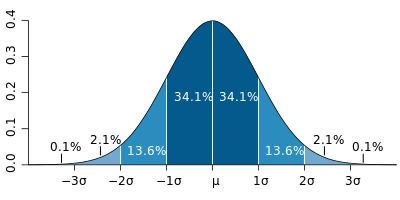
In our last class, she was describing what you can learn about data just by looking at its shape on a graph.  For instance, why is the “normal distribution” important?  What causes the curved shape that you see below to come about?    She showed us this 6 second video in which thousands of little beads are poured over a bunch of nails.  When a bead hits each nail, 50% of the beads will go right, and 50% will go left.  There are many more paths to get to the center of the distribution, and those on the wings have to be really un/lucky and get bounced the same way each time.  And, because there are so many beads and so many factors involved, they tend to balance themselves out and by the end you get a perfectly normal distribution—the bell curve.  In other words, the normal distribution is a result of a bunch of unbiased factors that sort out any given population.

So, I wondered, what is the pattern of income distribution in the United States?  If it was a normal distribution, that would mean the top of the bell curve would be  $51,914, the median income of the country (2011 US Census).  Within one standard deviation (the average distance from the median income), you would find 68.2% of the country, as we did in the graph above and in the probability machine video.  That majority would be flanked by 27% on the sides with about 4% in the extreme wings.   In general we would want the standard deviation to be small, as this would point to greater income equality; people’s incomes would be closer to each other.  As you can see in the graph below, more of the population is in the wings for the dark blue line, which would mean incomes would be further away from each other.  The light blue line would be preferred, where people have less disparate incomes.

But what we see in the United States today is not close.

The data is skewed left.  I scoured the internet for a graph that was 100% representational of our income distribution, but that proved to be as likely as finding a to-scale model of the solar system: it’s just too big.  Those big bars on the right need to be spread out like the rest of the graph all the way to casino tycoon Sheldon Adelson who made about something around 7.2 billion this year (Forbes).  Which means this graph is only representational of 0.0027% of the US household income distribution curve.  In other words, if this graph spans 6 inches across your screen, you would need a computer screen 18,000 feet wide to see the full distribution (0.5ft/0.000027).

Sheldon Adleson is the chairman of the Las Vegas Sands Corporation, the parent company of Venetian Macao Limited which operates The Venetian Resort Hotel Casino and the Sands Expo and Convention Center. He also owns the Israeli daily newspaper Israel HaYom.  He made $21.6 billion in the last three years.

What does this mean?

Let’s go back to the youtube video and the beads bouncing off the nails.  From the basic statistics that I understand, radically skewed distribution implies that the history of beads matter.  If the the bead had bounced lucky last time, it was more likely to bounce lucky again, and vice versa.  This makes sense to me.  It is much more difficult to go from an income of $30,000/year to $40,000/year, than it is to go from $1,000,000,000/year to $1,000,010,000/year.  In other words, the further down the road to wealth you are, the more likely you are going downhill.

So, I have advice for those looking to make more money; the first step to making money is having money.  The rich get richer.  Of course, there are plenty of exceptions.

I am sending this post to Professor Duckworth and my assistant professor, Peggy Kearn.  I want to hear what they think and see if there are any other conclusions we might draw from the shape of income distribution in America.  


Choices Make Us Lose

When I got married, I thought that one of the main benefits of mairrage would be that I would only have to make 1/2 the decisions.  This hypothesis was erroneous.

I think I hate making decisions so much because it is so tiring and also because Americans are particularly adept at it.  Americans seem to have a plethora of opinions on the tiniest things.  So we have hundreds of types of cereal, cookies, lawnmowers, milk, etc.

One of my professors gives a TED talk and gives his theory he calls, “the paradox of choice,”  he has also written a book.  You should watch, and do your best to ignore the oversized shirt, shorts, and high socks.

One of the implications of the downside of choice that I want to talk to Schwartz about is how third culture kids deal with the choices that they make in constructing their own culture.  Of course, they (we) will fail to construct a perfect culture.  We will behave irrationally in a variety of ways, have nobody to blame but ourselves, and feel guilty about the choice in a way that Schwartz talks about.  We think we could have made a better choice just like we could have bought a better pair of jeans.

Either way, maybe cutting more choice out of my life would be a good idea…


Jer’s Easy Steps to Happiness #1: The Magic Scrapbook of Puppies & Sunshine & Yogasms

For my graduate program, I am on site for three 10-hour class days and then in 3 weeks of distance learning.  Each distance learning period, we will be doing a positive intervention of some kind, and I will try to share it with you.  This time we did a positive portfolio, which is not magic and may or may not have to do with puppies, sunshine, or climactic yoga experiences.

A positive portfolio is a collection of poetry, quotes, pictures, music, anything really, all designed to engender in you personally some sort of positive state.  It might be serenity, inspiration, awe, joy, love, gratitude, security, safety, pride, empowerment, ebullience, etc.  Obviously many of these emotions overlap, but, after picking one, you try to create a portfolio that creates that positive emotion in you.

It does not have to be big portfolio, and putting it together is half the fun.  Students were asked to spend 15 minutes a day for a week going over them and record how we felt.  Across the board, we expressed powerful changes to our psyche, and apparently this is typical.

The rationale behind the Positive Portfolio is Barbara Fredrickson’s Broaden and Build theory of positive emotions.  It’s a big one in the literature, so let me describe it briefly.

Positive emotions tend to cause positive emotions.  They do this by broadening our horizons (Fredrickson has done numerous studies that indicate that a positive primer, such as a video of smiling children, tends to make people more creative, at ease, mentally alert, socially aware, kinder, etc.) and building resilience.  Resilience is the art of bouncing back from any bad thing, such as a casual insult, getting laid off, or even having all your family members killed in a car crash.  (One study found that after priming speakers before giving stressful presentations, their physiological response during the speech was the same, but those primed with a positive emotion bounced back quicker.)

In order get the upward spiral working, a certain threshold of positive to negative thoughts is required.  Fredrickson thinks it is 3:1.  Currently, my own ratio of positive to negative thoughts is just over 2:1.  Some of my classmates are as high as 6:1.  Depressed people tend to be about 1:1.  You can find out what yours is roughly at authentichappiness.org (sign up and take the PANAS test).

At one level, I agree with Fredrickson entirely.  It makes sense empirically, and it is a sort of self-reinforcing spiral that we see as a typical dynamic in all sorts of different contexts.  We see it in negative emotions (e.g., insecurity engenders insecurity), in the stock market, in ecosystems, etc.  Most pronounced for me professionally is the cyclical disinvestment in inner city neighborhoods.  People do not invest in their properties because the block is going downhill, and the block is going downhill because people do not invest.  This is also true in reverse, for blocks that are improving (e.g., I’m planting flowers because my neighbor put in a fountain).

The Positive Portfolio is an intervention that injects us with positive emotion in order to jump-start the positive feedback loop.

From top and left to right: Martin Luther, David Pollock, Socrates, Plato, praying old man (anonymous man who for represents the future & the past and our connection to a community beyond our moment in time), John Adams, Jesus, Hannibal, & Winston Churchill. I also would like to add the Napoleon, the Apostle Paul, Ahmad Shah Massoud, and Alcibiades, and the list keeps growing.

Initially, I designed my own positive portfolio to effect inspiration.  I chose it because, frankly, I am swamped right now with moving (we found an apartment!) and sickness, and I thought it would be easy; I have several heroes, and for Christmas last year my wife put together pictures of 9 of my favorite heroes/historical figures.  For various reasons, I feel a connection with these people and they inspire me.  If you ever make it to my house, you will see it above my desk.  However, I have never spent any time meditating on these images, so I thought this might be the perfect chance to do that.

But this backfired for me.  My problem is that I am possibly too driven.  I can be incredibly hard on myself and those around me.  I can treat myself and my abilities too seriously, and, frankly, piss off my wife.  Three days into my “positive intervention” she kindly suggested a change, “Let’s try serenity.”  So we did.  She helped me put the new portfolio together, and it had a much better affect on me.
First, I learned that I did not really know what serenity was.  The philosopher in me immediately set about trying to distinguish what it is from other states of mind.  I thought serenity would be engendered by things that reminded of who I am, where I come from, etc.  However, it seems to me more likely that serenity is a state of mind that does not need security or identity.  It is calmness irrespective of everything.  So my portfolio included some quotes about acceptance, some Winslow Homers, Turners, a few songs, quotes…here is a sample:

Boys in a Pasture — Winslow Homer, 1874

Anonymous photo that I found on the internet a while ago that I find deeply meaningful.

Jack Johnson’s Banana Pancakes

“To be human is to give up on perfection.” – Shoshanna, Americorps Trainer

The effect of spending some time with this portfolio everyday was powerful!  So here are my tips for those who want to try this:
  1. Do it.  It’s fun.
  2. Take your time making the portfolio, and make it with loved ones.  You can do it in less time than it takes to watch a movie.
  3. No need to spend 15 minutes a day.  5-7 minutes is likely enough.
  4. Pick the right emotion.  Overly serene people should probably not do serenity…you know who you are.  And like me, overly inspired people should not do inspiration either.
  5. You might make a digital version of this to put on your smart phone.  This way you can use it throughout the day as needed.
  6. A fun (albeit cheesy) project would be to make a short personalized video (slides and video set to music) that is meant to strengthen a specific emotional state that you struggle with personally.   You could have a number of them that help reinforce or strengthen certain aspects that you need.

In sum, I think there is something to this one, and in no small part because I did this before I even knew about positive psychology (Therefore Joy led me to do something similar, and also led me to want to study human happiness because of the profound affect it had on me personally).

However, I think Barbara Fredrickson’s Broaden and build theory might be tragically flawed.  Tune in next time to “Jer Thumbs his Nose at Brilliant Research Psychologists.”  It is going to be great!